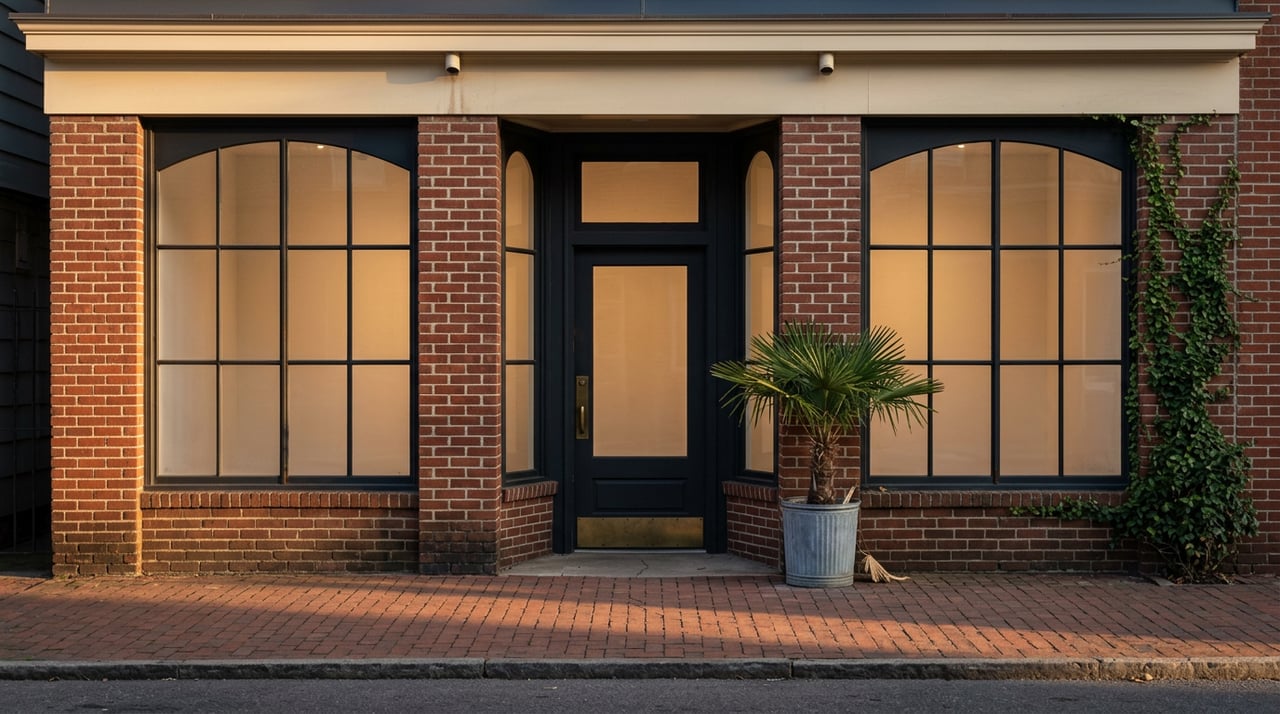
Julia Street on August 1 belonged to about 40,000 people in white linen, four stages of live music, and a lineup of food trucks parked between galleries that spend the other eleven months of the year fairly quiet. Fidelity Bank White Linen Night marked its 32nd year this summer, and for the first time it had a new hand on the wheel: French Quarter Festivals Inc. stepped in to co-produce the night alongside Arts District New Orleans, bringing expanded production and a bigger music lineup to the same six blocks that have hosted this party since 1994.
If you live in the Warehouse District, you already know what that night feels like. You also know it is not a preview of how the neighborhood actually spends its time. The crowd that shows up once a year for Primus on the Main Stage is not the crowd that shows up every month, and the difference between those two crowds is the real story here.
What August Actually Was
This year's White Linen Night leaned harder into its art-first identity than it has in recent memory. More than twenty galleries and museums debuted new exhibitions for the night, and the Arthur Roger Gallery on Julia Street carried one of the strongest showings: paintings from Keith Duncan's "Brass Gods" series, depicting second-line brass bands, alongside glass sculptures from Mitchell Gaudet built around cast birds and repurposed statuary. The Contemporary Arts Center, Ogden Museum of Southern Art, LeMieux Galleries, and Orleans Gallery all ran group shows built specifically for the crowd size the night draws.
That crowd size is real. Attendance estimates for the 2026 event ran to roughly 40,000 people across the district, which is not a number any single gallery would want to face on an ordinary Saturday. It is a spectacle built for spectacle, and it works precisely because it only happens once a year.
The Part That Happens Every Month
Here is what the White Linen Night coverage tends to leave out: the same galleries that hosted 40,000 people in August will host a fraction of that number in September, and they will do it again in October, and again in November. First Saturday Gallery Openings, sometimes still called by its older name, the Art Walk, runs on Julia Street on the first Saturday of every single month, year-round, with evening receptions typically running from 5 to 8 p.m. and daytime hours open beforehand.
There is no stage. There is no headline sponsor. Participation and hours vary gallery to gallery, which is part of the point. You are not being marketed to. You are walking into a working gallery on a Saturday evening to see what changed since last month.
The list of galleries that keep this going is longer than most visitors realize:
- Arthur Roger Gallery, 432 Julia Street
- LeMieux Galleries, 332 Julia Street
- Jonathan Ferrara Gallery, 400A Julia Street
- Callan Contemporary, 518 Julia Street
- Ariodante Gallery, 535 Julia Street
- Gallery 600 Julia, 600 Julia Street
- Degas Gallery, 604 Julia Street
- M Contemporary, 612 Julia Street
- Martine Chaisson Gallery, 727 Camp Street
- Stella Jones Gallery, 201 St. Charles Avenue
Each one runs its own calendar. Callan Contemporary's current show, Mitchell Lonas's "The Light Within," opened August 1 and stays up through September 15, which means the September First Saturday is still your window to see it before it comes down. Gallery 600 Julia has kept a rotating solo-show format going for years, cycling through Louisiana artists on a strict monthly schedule.
This is the version of the neighborhood that doesn't make it into the "best things to do" roundups, because it resists being packaged. You cannot promise a visitor a specific experience on a random First Saturday the way you can promise them a headliner on White Linen Night. What you can promise is that the galleries will be open, the walk will be free, and the crowd will be small enough that you can actually talk to the person who made the work.
The Habit Underneath the Monthly Habit
There is a third layer to this rhythm that has nothing to do with Saturdays at all. The Ogden Museum of Southern Art, at 925 Camp Street, runs Ogden After Hours every Thursday evening, a live music series set in the museum's atrium that pairs performances with short conversations between musicians and museum staff. It is a weekly fixture, not a seasonal one, and it has been part of the district's calendar long enough that regulars plan their Thursdays around it without thinking twice.
The detail that matters most for anyone who actually lives in the district: the Ogden is free to Louisiana residents every Thursday from 10 a.m. to 5 p.m., underwritten by The Helis Foundation. That is not a discount code or a promotional week. It is a standing arrangement, which means a museum most visitors treat as a paid stop is, for residents, simply part of the neighborhood's Thursday.
Stack these three cadences next to each other and the shape of the district gets clearer. There is a weekly beat at the Ogden. There is a monthly beat on Julia Street. And there is one loud, well-produced, once-a-year night in August that both of those quieter rhythms make possible, because the same galleries and the same museum staff who show up for a Thursday crowd of forty are the ones who scale up to host a Saturday crowd of forty thousand.
Why the Contrast Matters
The mistake outsiders make about the Warehouse District is assuming White Linen Night is the neighborhood's personality rather than its once-a-year performance of that personality. The truth runs the other direction. The personality is Thursday at the Ogden and the first Saturday of whatever month it happens to be. August is the night the neighborhood puts on the version of itself it wants visitors to see. The other eleven months are the version residents actually get.
That distinction is worth knowing if you already call this neighborhood home, because it means you don't need to wait for a headline sponsor or a 40,000-person night to get the district's art-world texture. It is available on a Thursday, at a museum a few blocks from wherever you live, for free, on a schedule that has held for years without needing a producer to make it work.
If you are the kind of person who wants to actually see the district this way, the practical move is simple. Pick a Thursday and go to Ogden After Hours. Pick a first Saturday and walk Julia Street start to finish, checking which galleries happen to have their doors open that week. Skip August if you want to. The neighborhood will still be there in September, doing what it does every month, whether or not anyone is watching.
Jolí Burrell Real Estate works with buyers, sellers, and investors across the Warehouse District and the wider Greater New Orleans market, bringing more than two decades of broker-level experience to every conversation about where and how to live in this city. If you have questions about the district, its market, or what a move here or within it might look like, Jolí Burrell Real Estate is a call away.
